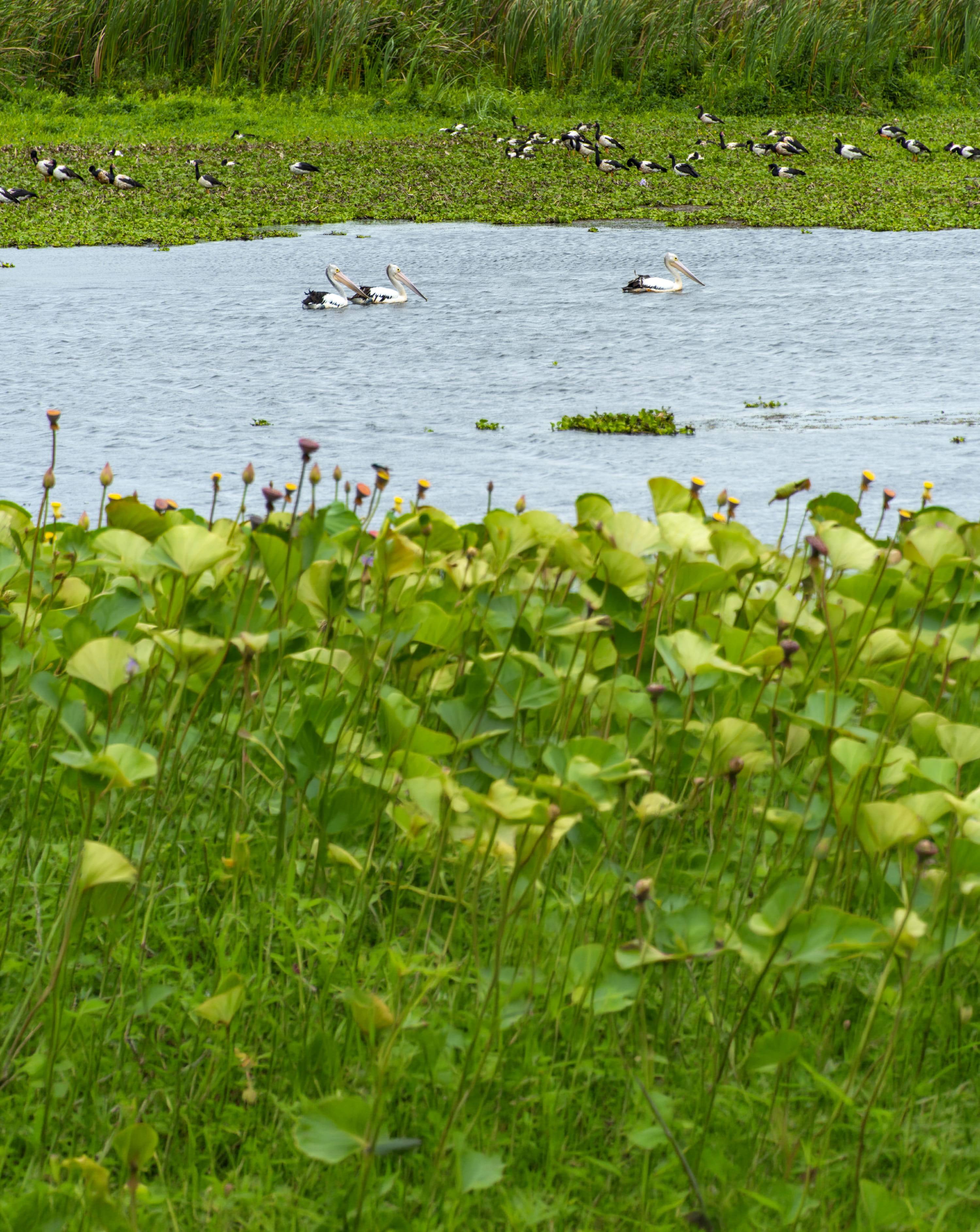
While the Burdekin has long been synonymous with sugarcane farming and fishing, its wetlands and waterways also make it a worthwhile destination for birdwatchers.
The region’s combination of freshwater lagoons, wetlands, mangroves and coastal mudflats supports a wide variety of birdlife, from resident waterbirds to migratory shorebirds that travel thousands of kilometres to reach Australian shores.
Cromarty Wetlands is one of the best places to start looking. With more than 250 bird species recorded, the wetlands attract Magpie Geese, Brolgas, herons, egrets and a range of other waterbirds. The variety of species makes it a popular location for birdwatchers and nature enthusiasts.
Further north, Horseshoe Lagoon offers another good opportunity to observe local birdlife. The freshwater lagoon features a bird hide, allowing visitors to watch birds without disturbing their habitat. Species to look out for include the Black-necked Stork, commonly known as the jabiru, as well as darters, spoonbills and jacanas.
Closer to Ayr, Lilliesmere Lagoon provides another accessible location for spotting waterbirds. As with other wetlands in the region, the number and variety of birds can change depending on rainfall and water levels.
The Burdekin River Delta is also worth exploring, particularly for those interested in migratory shorebirds. Its mudflats and estuarine habitats provide important feeding grounds for birds travelling from breeding grounds across northern Asia and Siberia. The summer months are a particularly good time to look for these seasonal visitors.
Early morning is generally the best time to head out, before temperatures rise and bird activity slows. Binoculars and a camera are useful, while checking tide times is recommended when visiting coastal areas.
Whether you're an experienced birdwatcher or simply looking for another way to explore the region, the Burdekin offers several worthwhile locations to discover its diverse birdlife.
Contact Info
Phone:
0417267373
Business hours:
Mon - Fri: 8 AM - 5 PM
Sat - Sun: Closed
Publishers Indemnity. Any individual or entity that places advertising, supplies copy material, or submits editorial content to Core Life Publishing agrees and undertakes to ensure that all such material:- Does not infringe upon any copyright, trademark, or other intellectual property rights;- Is free from any content that could be considered defamatory, libelous, or slanderous;- Does not infringe upon any rights related to privacy or breach of confidence;- Contains no obscene, indecent, or otherwise unlawful material;- Complies fully with the Trade Practices Act and all other applicable laws, regulations, or statutes.Furthermore, by submitting or placing such material, these individuals or entities agree to indemnify and hold harmless the publisher, Core Publishing and Events Pty Ltd, and/or its agents from and against any and all investigations, claims, demands, liabilities, damages, costs, or judgments arising out of or in connection with the material provided. All material is believed to be accurate at the time of printing and remains the copyright of Core Publishing and Events Pty Ltd.
© 2026 Tripping Magazine Pty Ltd. All Rights Reserved