By Zach Houtenville
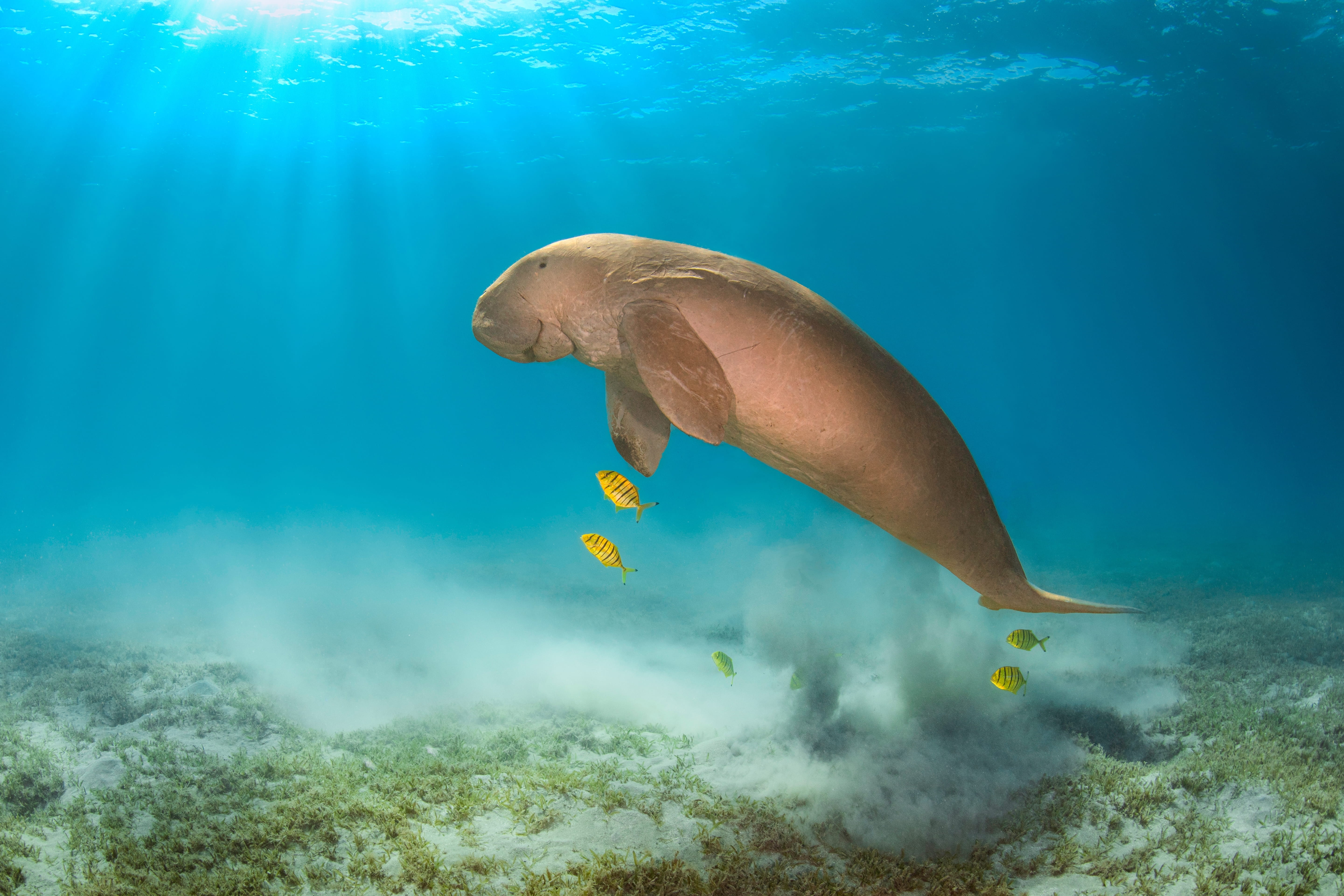
In the light blue waters around the Whitsundays, the seagrass meadows have their own sea cows to help give them a trim.
These are the mighty dugongs.
They’ve been catching people’s attention for centuries. Dugongs are thought to have helped inspire legends, with sailors mistaking these massive but gentle nibblers for elegant mermaids.
A generous comparison, perhaps, but we’ll give the sailors the benefit of the doubt.
With a broad snout and a bristly upper lip, these grazers consume between 28 to 50 kgs of seagrass a day, spending much of their day working to meet that quota.
According to Whitsunday Conservation Council president and former diver Tony Fontes, dugongs can be elusive, but there are several local spots worth keeping an eye on.
Around Airlie Beach, try scanning the water from the Cannonvale foreshore. For a better vantage point, head towards the Marine Rescue Queensland building, formerly VMR, and look out towards Pigeon Island.
But, to increase your odds, you probably should take a drive up to Bowen.
Edgecumbe Bay is a good place to start, with Bowen Jetty offering a handy vantage point to scan the water for a passing sea cow, with turtles for added bonus.
McCanes Bay is another hotspot, where plentiful seagrass meadows give these underwater grazers a reason to linger.
Patience helps here.
Dugongs keep a low profile, so watch for a rounded back or a snout briefly breaking the water for a breath. It might be a fleeting appearance, but that makes spotting one all the sweeter.
If you’re out boating, take it slowly through shallow water and give them plenty of room. Nobody likes their lunch disturbed, especially a dugong.
Contact Info
Phone:
0417267373
Business hours:
Mon - Fri: 8 AM - 5 PM
Sat - Sun: Closed
Publishers Indemnity. Any individual or entity that places advertising, supplies copy material, or submits editorial content to Core Life Publishing agrees and undertakes to ensure that all such material:- Does not infringe upon any copyright, trademark, or other intellectual property rights;- Is free from any content that could be considered defamatory, libelous, or slanderous;- Does not infringe upon any rights related to privacy or breach of confidence;- Contains no obscene, indecent, or otherwise unlawful material;- Complies fully with the Trade Practices Act and all other applicable laws, regulations, or statutes.Furthermore, by submitting or placing such material, these individuals or entities agree to indemnify and hold harmless the publisher, Core Publishing and Events Pty Ltd, and/or its agents from and against any and all investigations, claims, demands, liabilities, damages, costs, or judgments arising out of or in connection with the material provided. All material is believed to be accurate at the time of printing and remains the copyright of Core Publishing and Events Pty Ltd.
© 2026 Tripping Magazine Pty Ltd. All Rights Reserved