By Victoria Velton
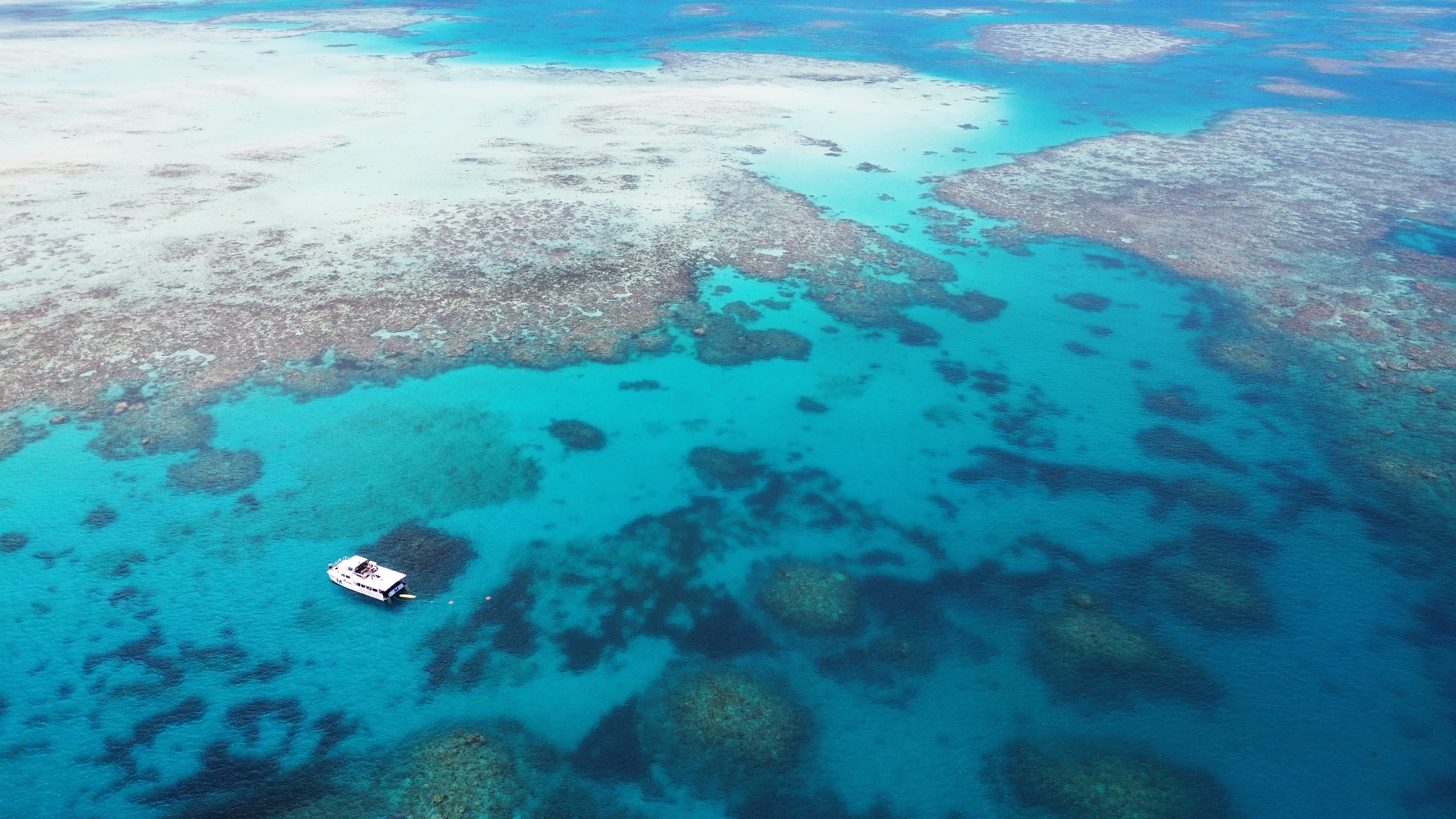
Heading out on the water from Mission Beach, the sheltered green bay soon gives way to a peaceful sapphire blue. It's perfect weather; warm enough that the breeze off the ocean is welcomed, with just a touch of cloud cover to keep the sun at bay.
As we leave the mainland behind, a school of silver baitfish ripples along the surface. We slow to watch a pair of dolphins dip and dive in hungry pursuit.
Dunk and Hinchinbrook Island take on deep grey forms behind us as we cruise beyond the last of the islands. Open ocean stretches wide ahead, glittering and peaceful.
There are no other boats in sight, just the small company on board. International travellers swap stories of previous ocean adventures and express their keenness snorkel and dive on the Great Barrier Reef.
Clownfish and sea snakes, damselfish and giant wrasse, rays and whale sharks. Fish spotters' bucket lists are compared, while the skipper shares sea tales, interesting facts and helpful information.
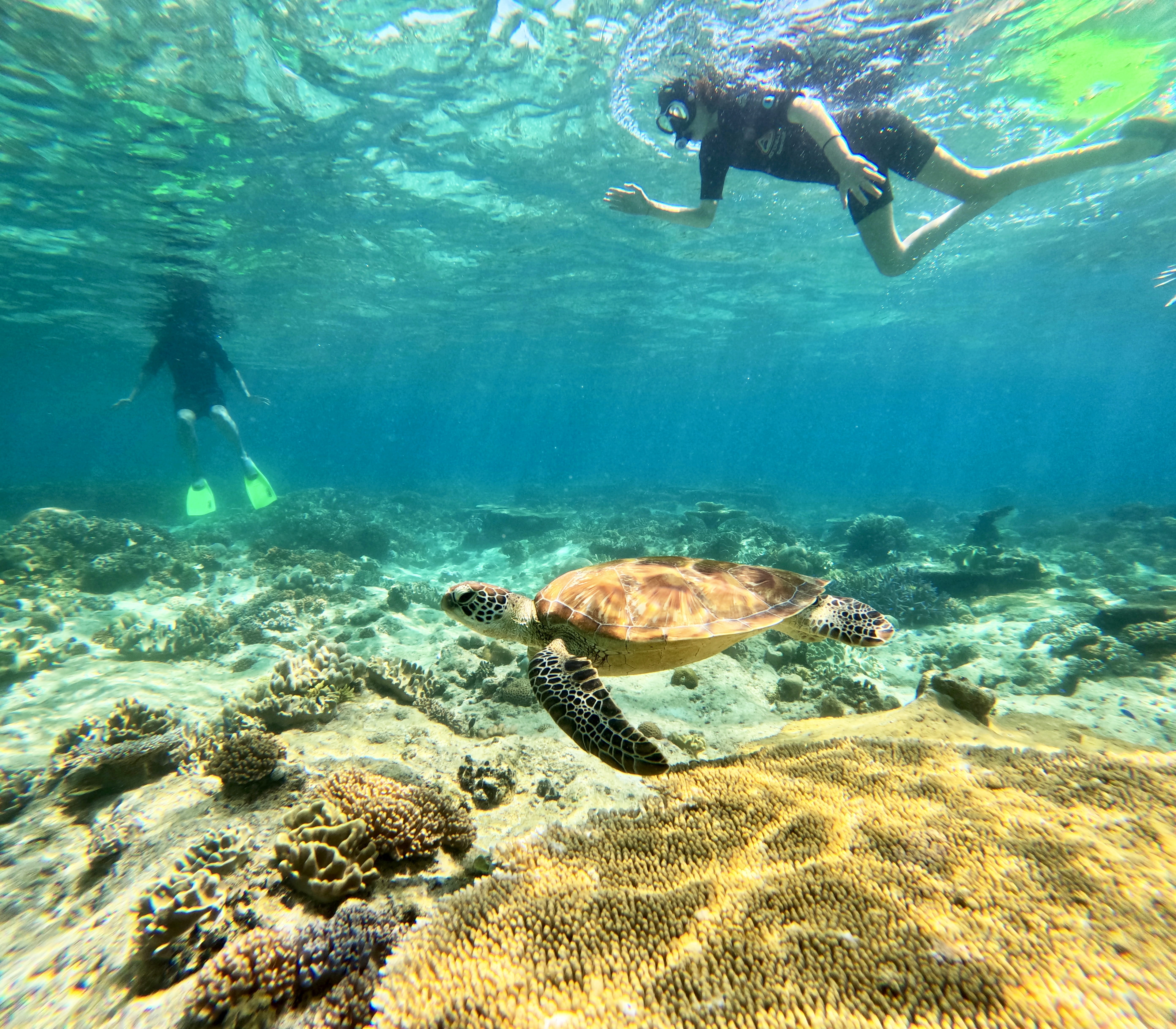
Just under 40 nautical miles from the coast lies a peaceful collection of reefs. It feels as though we have the place to ourselves. Kitted out in stinger suits, snorkels and flippers, the small group jumps into the turquoise water.
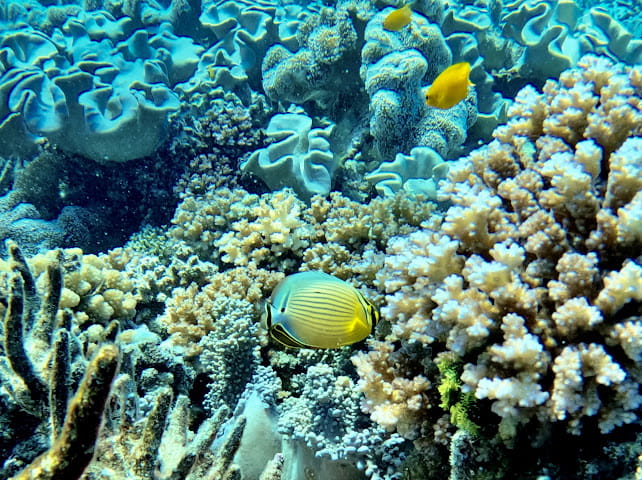
Shelves of coral and swaying anemones provide a colourful backdrop for the iridescent fish darting about.
Some visitors dive down to swim alongside green trumpetfish and hippo tangs, exclaiming over enormous blue sea stars and the loud crunching of the magenta and emerald parrotfish munching on the coral, seemingly unbothered by the handful of snorkellers drifting above.
Pairs of butterflyfish dance together, while schools of zebra fish gather in great numbers along the coral shelf. Duck-dive for a closer peek, and twisting brain corals and branching red fan corals reveal tiny reef dwellers tucked away among them.
If you want to go deeper, scuba diving offers the chance to get closer and slow down.
Depending on the course and experience level, dives reach depths of 12 to 30 metres, circling the reef and exploring the creatures lurking in crevices and beneath the coral shelves.
An octopus links its arms, a perched nudibranch shows off its yellow fluorescent glory, and giant sea cucumbers quietly clean the ocean floor. Manta rays and a blacktip reef shark pass by, seemingly intrigued by the columns of bubbles rising from divers learning alongside a qualified instructor.
Once you've seen all you can and it's time to head back to shore, the dolphins are there again, showing off in leaps to welcome you back.
Based in Mission Beach, locally owned Mission Beach Dive is giving visitors the opportunity to explore the Great Barrier Reef through small-group snorkelling and scuba diving experiences.
Led by local knowledge, trips visit a range of reefs, including Friendship Reef and Beaver Reef, as well as several popular swimming spots in between known as Shenanigans, Coliseum, Jackpot and Geronimo.
Taylor’s Reef is another standout location, featuring a sandbar where visitors can swim ashore and take a break out of the water. However, access to the sandbar is restricted between October and March during the breeding season for migrating seabirds.
“The Reef Was Never Meant To Feel Crowded.”
Operating from Clump Point Marina, the PADI Dive Centre offers access to outer reef locations including Beaver Reef and Taylor Reef, with boat trips taking approximately 60 to 90 minutes. The operator limits groups to a maximum of 12 divers, allowing for more personalised guidance and time in the water.
Experiences cater to a range of abilities, from guided snorkelling for beginners and families to introductory scuba dives and full PADI certification courses. Certified divers can also join guided two-dive reef trips, where experienced instructors and divemasters share their knowledge of the marine environment.
The business also offers seasonal experiences, including whale watching tours, monthly full moon night dives and coral spawning trips, alongside private charters for groups, schools and research teams.
Environmental responsibility is a key part of its operation, with reef-safe sunscreen requirements, no-touch marine life policies and participation in reef health monitoring.
Contact Info
Phone:
0417267373
Business hours:
Mon - Fri: 8 AM - 5 PM
Sat - Sun: Closed
Publishers Indemnity. Any individual or entity that places advertising, supplies copy material, or submits editorial content to Core Life Publishing agrees and undertakes to ensure that all such material:- Does not infringe upon any copyright, trademark, or other intellectual property rights;- Is free from any content that could be considered defamatory, libelous, or slanderous;- Does not infringe upon any rights related to privacy or breach of confidence;- Contains no obscene, indecent, or otherwise unlawful material;- Complies fully with the Trade Practices Act and all other applicable laws, regulations, or statutes.Furthermore, by submitting or placing such material, these individuals or entities agree to indemnify and hold harmless the publisher, Core Publishing and Events Pty Ltd, and/or its agents from and against any and all investigations, claims, demands, liabilities, damages, costs, or judgments arising out of or in connection with the material provided. All material is believed to be accurate at the time of printing and remains the copyright of Core Publishing and Events Pty Ltd.
© 2026 Tripping Magazine Pty Ltd. All Rights Reserved