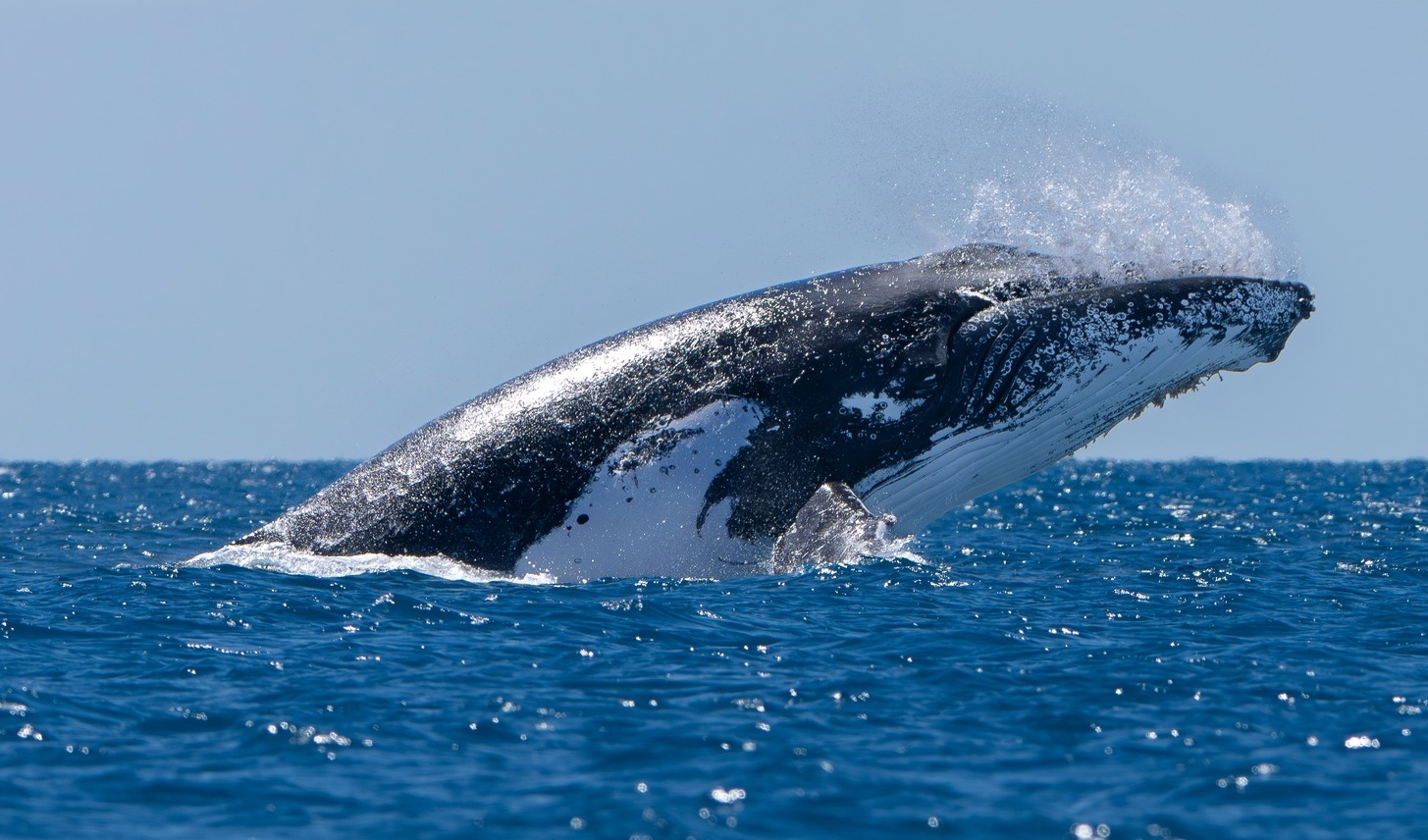
Each year, as the winter months settle across North Queensland, something truly magical begins to unfold along the coastline. From Mackay through the Whitsundays and up to Tully, the ocean comes alive with the arrival of humpback whales; majestic, playful and impossible to forget. It’s a seasonal spectacle that transforms an already stunning stretch of coast into one of Australia’s most memorable wildlife experiences.
Whale season typically runs from June to September, when thousands of humpback whales migrate north from Antarctica to the warmer waters of the Great Barrier Reef to breed, calve and socialise. Along this particular stretch of coast, they’re not just passing through, they’re lingering. The calm, sheltered waters provide the perfect environment for mothers and calves, making sightings both frequent and incredibly special.
Starting in Mackay, the coastline offers some fantastic vantage points for spotting whales from shore. Head to headlands and elevated lookouts where the ocean stretches wide and uninterrupted. Locations like Slade Point and the surrounding coastal reserves are popular with locals who know that patience often pays off. On a clear day, you might spot a distant breach or the tell-tale splash of a tail on the horizon.
Further north, the Whitsundays region is widely considered one of the best places in Australia to experience whale season up close. Airlie Beach serves as the gateway to the islands, and from here, numerous tour operators run dedicated whale-watching cruises. These tours venture into the protected waters around the islands, where whales are often seen resting, playing and interacting in a way that feels almost surreal.
The beauty of the Whitsundays lies in how close you can get, safely and respectfully, to these gentle giants. It’s not uncommon to see a curious whale approach a boat, or a calf practising breaches under the watchful eye of its mother. The experience is as humbling as it is exhilarating.
For those who prefer to stay on land, island vantage points offer equally rewarding opportunities. Hill Inlet Lookout on Whitsunday Island and various coastal lookouts across the island group provide sweeping views where whales can often be seen moving through the channels below.
As you continue north, Townsville and nearby Magnetic Island offer another prime whale-watching region. The island’s many bays and headlands create ideal viewing platforms, particularly during peak migration months. Spots like West Point and the Forts Walk provide elevated views where you can often see whales cruising past or breaching in the distance.
Magnetic Island’s slower pace makes whale watching feel even more special, it’s less about ticking off a sighting and more about soaking in the moment. Bring a picnic, find a quiet lookout and let the ocean put on its show.
Further up the coast towards Mission Beach and Tully, the sightings continue, though with a slightly more untouched, off-the-beaten-path feel. This stretch of coastline is less developed, meaning fewer crowds and a more intimate connection with the environment. Long beaches and quiet headlands provide the perfect setting for spotting whales as they move steadily along the coast.
What makes whale season along this region so special isn’t just the sightings themselves, it’s the setting. The backdrop of tropical islands, reef-fringed waters and lush coastline elevates the entire experience, turning each encounter into something cinematic.
Whether you’re watching from a boat in the Whitsundays, scanning the horizon from a coastal lookout or stumbling across a sighting during a beach walk, whale season from Mackay to Tully is a reminder of just how extraordinary nature can be.
All you need is a little patience… and a sense of wonder.
Contact Info
Phone:
0417267373
Business hours:
Mon - Fri: 8 AM - 5 PM
Sat - Sun: Closed
Publishers Indemnity. Any individual or entity that places advertising, supplies copy material, or submits editorial content to Core Life Publishing agrees and undertakes to ensure that all such material:- Does not infringe upon any copyright, trademark, or other intellectual property rights;- Is free from any content that could be considered defamatory, libelous, or slanderous;- Does not infringe upon any rights related to privacy or breach of confidence;- Contains no obscene, indecent, or otherwise unlawful material;- Complies fully with the Trade Practices Act and all other applicable laws, regulations, or statutes.Furthermore, by submitting or placing such material, these individuals or entities agree to indemnify and hold harmless the publisher, Core Publishing and Events Pty Ltd, and/or its agents from and against any and all investigations, claims, demands, liabilities, damages, costs, or judgments arising out of or in connection with the material provided. All material is believed to be accurate at the time of printing and remains the copyright of Core Publishing and Events Pty Ltd.
© 2026 Tripping Magazine Pty Ltd. All Rights Reserved
1.jpg)