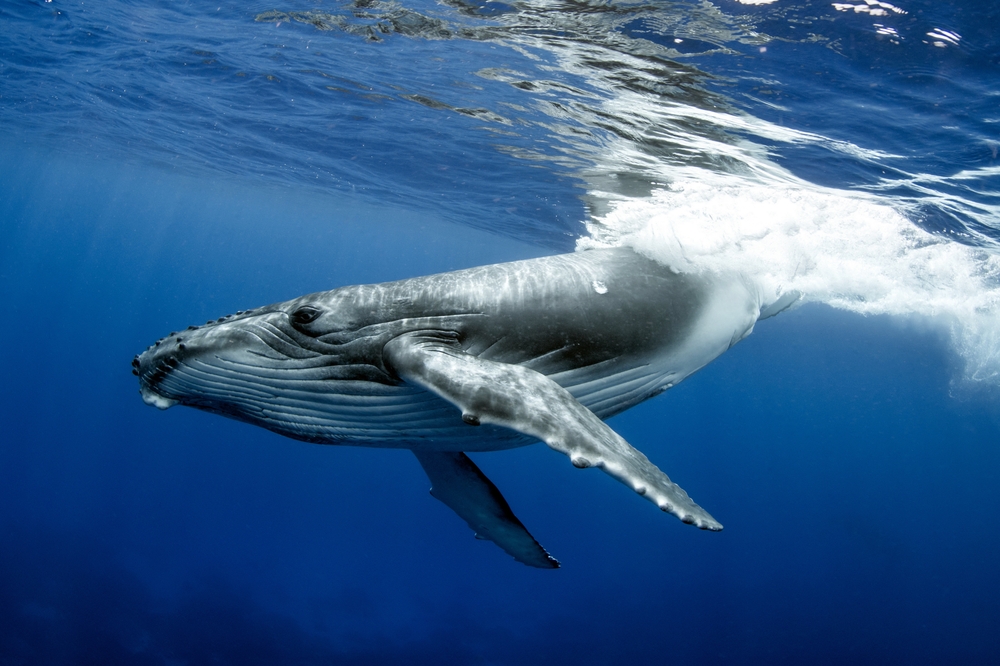
Is there anywhere better to spend winter than the North Queensland? Bringing more than sunny days and crystal-clear waters, the winter season turns the tropical waters into one of Australia's most spectacular whale-watching destinations, as thousands of humpback whales arrive on their annual migration from Antarctica.
Travelling more than 5,000 kilometres, these gentle giants leave the icy Southern Ocean for the sheltered, warm waters of the Whitsundays, where many females give birth and nurse their newborn calves. Research has confirmed that the Whitsundays is an important humpback birthing ground, with the area's unique mix of deep channels and shallow reef creating a safe nursery for mothers and calves.
The significance of this annual migration has earned the Whitsundays international recognition as a Whale Heritage Area – the first located within a UNESCO World Heritage-listed marine park. It is a title that celebrates both the region's extraordinary whale population and its commitment to protecting them.
For visitors, migration season offers countless opportunities to witness unforgettable wildlife encounters. Dedicated whale-watching cruises provide the best chance to see spectacular breaches, tail slaps and playful calves swimming alongside their mothers. Many Great Barrier Reef and Whitehaven Beach tours also encounter whales during winter, making every day on the water a potential front-row seat to nature's greatest show.
Even from the mainland, patient observers can sometimes spot whales from coastal lookouts on calm days.
Whether you're cruising across turquoise waters or watching from shore, seeing a humpback whale in its natural habitat is one of North Queensland’s most memorable winter experiences—and a compelling reason to visit during migration season.
Contact Info
Phone:
0417267373
Business hours:
Mon - Fri: 8 AM - 5 PM
Sat - Sun: Closed
Publishers Indemnity. Any individual or entity that places advertising, supplies copy material, or submits editorial content to Core Life Publishing agrees and undertakes to ensure that all such material:- Does not infringe upon any copyright, trademark, or other intellectual property rights;- Is free from any content that could be considered defamatory, libelous, or slanderous;- Does not infringe upon any rights related to privacy or breach of confidence;- Contains no obscene, indecent, or otherwise unlawful material;- Complies fully with the Trade Practices Act and all other applicable laws, regulations, or statutes.Furthermore, by submitting or placing such material, these individuals or entities agree to indemnify and hold harmless the publisher, Core Publishing and Events Pty Ltd, and/or its agents from and against any and all investigations, claims, demands, liabilities, damages, costs, or judgments arising out of or in connection with the material provided. All material is believed to be accurate at the time of printing and remains the copyright of Core Publishing and Events Pty Ltd.
© 2026 Tripping Magazine Pty Ltd. All Rights Reserved