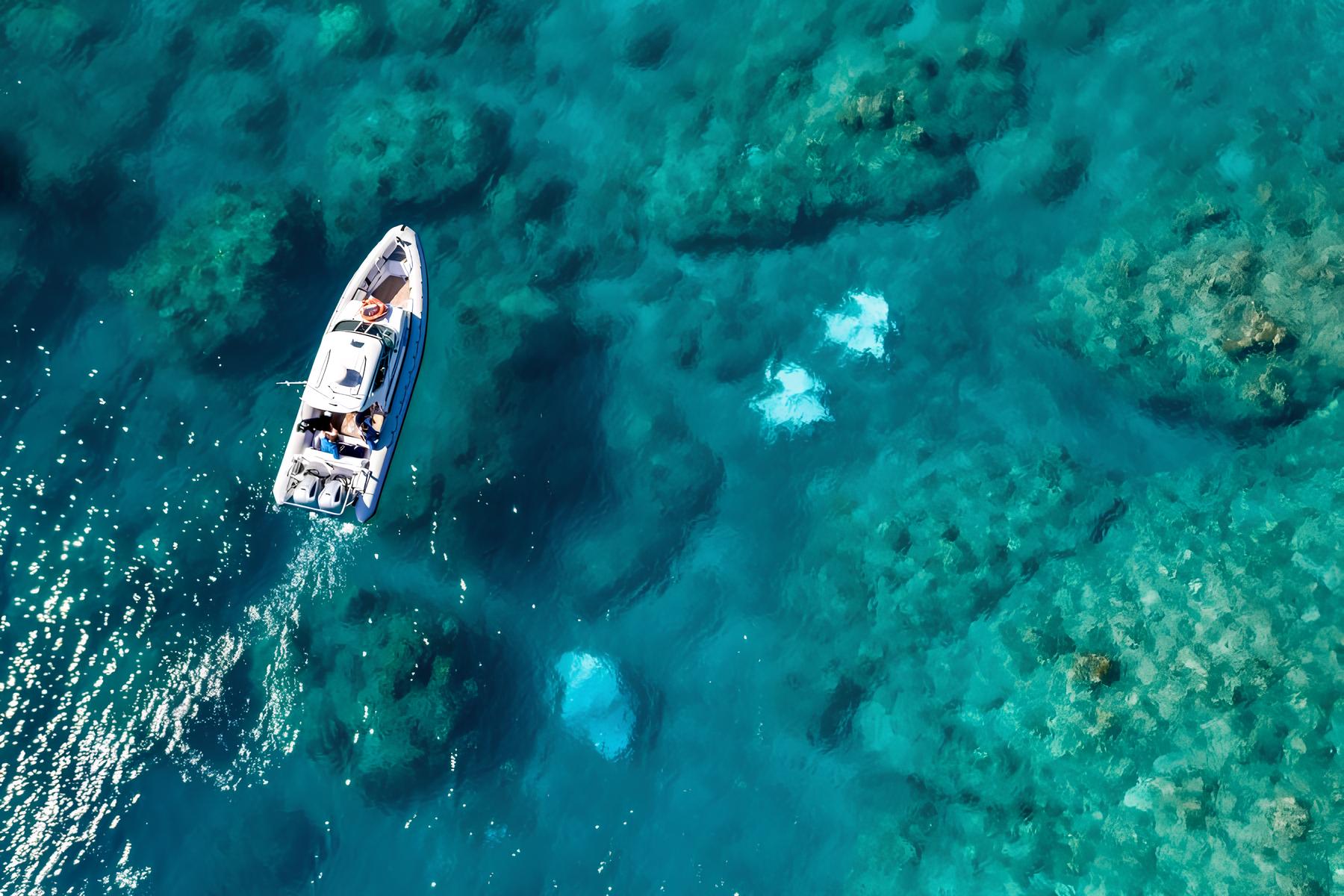
Photo Credit: Phill Gordon, Riptide Creative
Long before Whitsunday Island became known around the world for its brilliant white sands and turquoise waters, it was home to the Ngaro people, a seafaring Aboriginal people who lived throughout the islands for thousands of years.
The Ngaro people maintain an intimate connection with the sea and islands.
Historically, they travelled by traditional watercraft, the rich marine environment providing food and resources. Evidence indicates the Ngaro people inhabited Whitsunday Island and the surrounding area for around 8,000 years before Europeancolonisation.
On Sunday 3rd June, 1770, James Cook sailed the HMS Endeavour through a broad passage between the islands. The day coincided with Whitsun, the Christian celebration of Pentecost, and Cook named the waterway Whitsunday's Passage.
To settlers, the islands around Cook's Whitsunday's Passage became known as the Whitsunday Islands. Whitsunday Island itself became the centrepiece.
As the largest of the group, Whitsunday Island covers approximately 27,508 hectares. Its coastline is marked by sheltered bays, inlets and beaches, while its northern waters contain seagrass beds supporting a diverse range of marine life.
It was not until almost a century after Cook's voyage that tourism began to hit the Whitsunday Islands.
By the mid-1860s, colonists were organising boat trips from the port of Bowen, early models of what would eventually become one of the region's defining industries. These excursions began to gather real momentum during the 1920s.
Today, the island has become one of Queensland’s most iconic beauty spots, best known for the white silica sand of Whitehaven Beach. A short walk from the beach, Hill Inlet provides one of the region's most photographed scenes, where shifting tides move the sand and water into constantly changing patterns.
New to Whitsunday Island in 2026 is the Ngaro track, a great walk taking adventurers across a 32km track, recommended to be tackled over three days and two nights. The track winds over the hills into almost untouched bushlands, offering the most pristine and ecological experience of the island.
Under the sea, the Ngaro Whitsundays Underwater Art Trail reveals submerged sculptures to snorkellers and scuba divers, with the works designed to complement and evolve with the corals and sea life.
Though tourism has arrived onto Whitsunday’s Island shores, the island remains part of Queensland's national park system, with protectors steadfast in their commitment to maintain the landscapes that have attracted visitors for generations, for those to come.
Contact Info
Phone:
0417267373
Business hours:
Mon - Fri: 8 AM - 5 PM
Sat - Sun: Closed
Publishers Indemnity. Any individual or entity that places advertising, supplies copy material, or submits editorial content to Core Life Publishing agrees and undertakes to ensure that all such material:- Does not infringe upon any copyright, trademark, or other intellectual property rights;- Is free from any content that could be considered defamatory, libelous, or slanderous;- Does not infringe upon any rights related to privacy or breach of confidence;- Contains no obscene, indecent, or otherwise unlawful material;- Complies fully with the Trade Practices Act and all other applicable laws, regulations, or statutes.Furthermore, by submitting or placing such material, these individuals or entities agree to indemnify and hold harmless the publisher, Core Publishing and Events Pty Ltd, and/or its agents from and against any and all investigations, claims, demands, liabilities, damages, costs, or judgments arising out of or in connection with the material provided. All material is believed to be accurate at the time of printing and remains the copyright of Core Publishing and Events Pty Ltd.
© 2026 Tripping Magazine Pty Ltd. All Rights Reserved